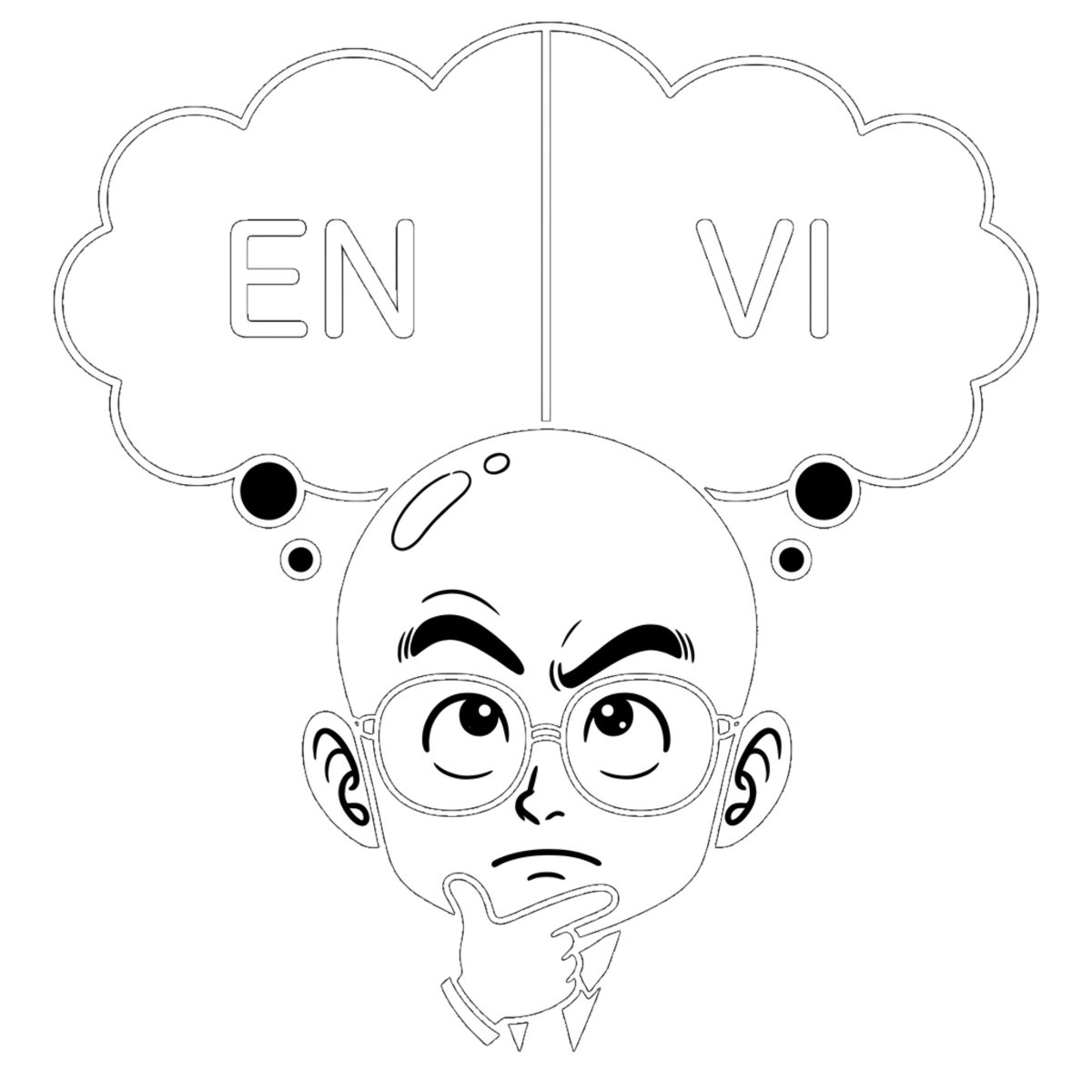
The Thinking Token Moat: Unlocking Original Vietnamese Drafting on AI
For over a month, every draft written by Hermes Agent had correct words and a foreign rhythm—falling into what I call 'rough translation.' The breakthrough wasn't a magic prompt; it was forcing the agent's internal Thinking Tokens into native Vietnamese from the very first word.
Context & Setup: The Silent Translation Trap
In May 2026, I was managing two major content channels simultaneously: developing technical bilingual logs for this personal site, and building a massive 19-post specialty coffee education library for Le J’ Cafe in Da Lat (a roaster managing 14 active specialty coffee products across 9 Arabica/Robusta variety families).
The editorial standards were non-negotiable: the writing had to sound like a passionate, local practitioner, address technical agricultural and biochemical details directly, and stay entirely clean of hollow, repetitive “AI marketing prose.”
My setup used Hermes Agent to process raw data sheets into polished drafts. But for weeks, I faced a frustrating roadblock: every sentence of Vietnamese produced by Hermes Agent was grammatically correct, yet carried a stiff, unnatural foreign rhythm.
I called this failure dịch thô (rough translation). It is the practical description of an AI model thinking and structuring concepts in English first (since the vast majority of SOTA pre-training weights are English-first), and then performing a silent translation step into Vietnamese at the final output layer. The loss of native rhythm and storytelling structure begins right at this internal translation step.
The Obstacles: Why Fixing the Output Layer Fails
I tried everything to fix this at the output level, and every attempt failed:
- Prompting “Write naturally” (Prompting hard): I appended instructions like “write naturally, mộc mạc, and authentic.” Hermes Agent replaced a few nouns, but the English-style complex relative clauses carrying Western sentence structures remained entirely unchanged.
- Silent manual editing: When drafts came back awkward, I corrected them myself. I broke up long sentences, threw away repetitive introductions, and replaced translated terms. It saved the immediate Catimor or THA-1 draft on my screen, but by the next article, the exact same errors returned. I had made myself a permanent copyeditor for Hermes Agent, while the underlying system never got smarter.
I realized the core bottleneck: To write natural Vietnamese, I couldn’t let Hermes Agent think in English and repair the grammar at the end. I had to intervene directly inside the agent’s draft reasoning layer.
The Secret: Forcing “Thinking Tokens” to Think Natively
Modern reasoning or large language models (such as Claude Sonnet 5, Gemini 3.0 Pro, or chain-of-thought models) utilize an internal processing window called Thinking Space before printing the final characters on your screen. In this space, the model generates hidden Thinking Tokens.
Because standard developer prompts and agent systemic instructions are written in English, the model automatically drafts its internal Thinking Tokens in English. Once the hidden “thought draft” is structured in English, it exerts an immense semantic gravity that forces the final Vietnamese output to mirror Western syntax (thesis-first, heavy use of negative descriptors, and clunky link phrases).
The breakthrough mechanism is a secret very few grasp in the AI space: If you force the model’s internal Thinking Tokens to generate directly in Vietnamese from the very first character, the model activates its native Vietnamese data distribution directly, entirely bypassing the translation layer and clean-sweeping translation artifacts.

I packaged this exact coercion rule into a minimalist, 600-word Hermes Agent skill file called vietnamese-writer. It forces the model’s internal nháp thầm (thought draft) to generate natively in Vietnamese, represented in the visible terminal logs as:
[thinking] 1. Chuyển sang tư duy tiếng Việt (Switch to native Vietnamese thinking)
[thinking] 2. Lập dàn ý bằng tiếng Việt (Outline directly in Vietnamese)
[thinking] 3. Chạy Thinking Tokens nháp trực tiếp tiếng Việt (Generate thinking tokens natively)
On the afternoon of June 16, we launched this skill across our subagents for a batch test of 10 long-form posts spanning diverse subjects (from botanical specifications to technical data migrations). The result was a dramatic shift: all 10 drafts (covering biological varieties, technical workflows, and software migrations) came back with native-sounding, punchy, and mộc mạc prose on the first run, without needing manual paragraph edits. The mechanism proved universally valid for any structured or narrative subject (finance, software, or storytelling) rather than being unique to a niche domain.
Recommended Models for Native Vietnamese Writing
Based on extensive production testing running long-form campaigns through our local proxy, here are the real-world performance rankings for generating native Vietnamese writing in early 2026:
- #1 Gemini 3.5 Flash / 3.0 Pro: Exceptional at local Vietnamese nuances, mộc mạc prose cadence, and context-first storytelling rhythm. It currently possesses the cleanest localized dataset.
- #2 Claude Opus 4.8: The gold standard for deep academic reasoning and structural accuracy (critical for keeping complex technical schemas and logical hierarchies perfect) when paired with native Vietnamese thinking token rules.
- #3 DeepSeek v4 & Chinese Engines (Qwen 3.6, Kimi): Outstanding performance in Eastern grammatical structure. They write in clean, tight sentences and avoid Western AI transition clichés beautifully.
Deploying the Skill to Your Agent Gateway
The vietnamese-writer skill is a durable, structured tool saved on our platform. Instead of fighting prompt drift across random floating chats, you can download, modify the audit checklist (Check) to match your own brand voice, and install it to Hermes Agent:
Get the direct install commands and full open-source configurations: Vietnamese Writer Tool Post →
By standardizing this skillset across your agent infrastructure, your voice remains authentic, reliable, and grounded, regardless of which underlying model you deploy to write to your audience.
Let’s Figure Your Workflow Out
Forcing your agent to think natively is about more than just blog posts. It establishes a high-fidelity connection where the AI understands the actual, un-compressed context of Vietnamese builders without double-translation loss.
If you are struggling to remove stiff “AI-style” translation artifacts from your domestic content, or want to configure custom language skill scripts on your local agent gateway, let’s connect:
- Discord:
annguyen175(Or send a direct message via this link) - Email:
[email protected] - Facebook Discussion Group: vnhermesagent
Send over a sample draft that is feeling clunky, alongside the actual goals you are trying to output. We’ll trace the underlying thinking tokens together, seal the translation leaks, and deliver a smooth blueprint for your setup.